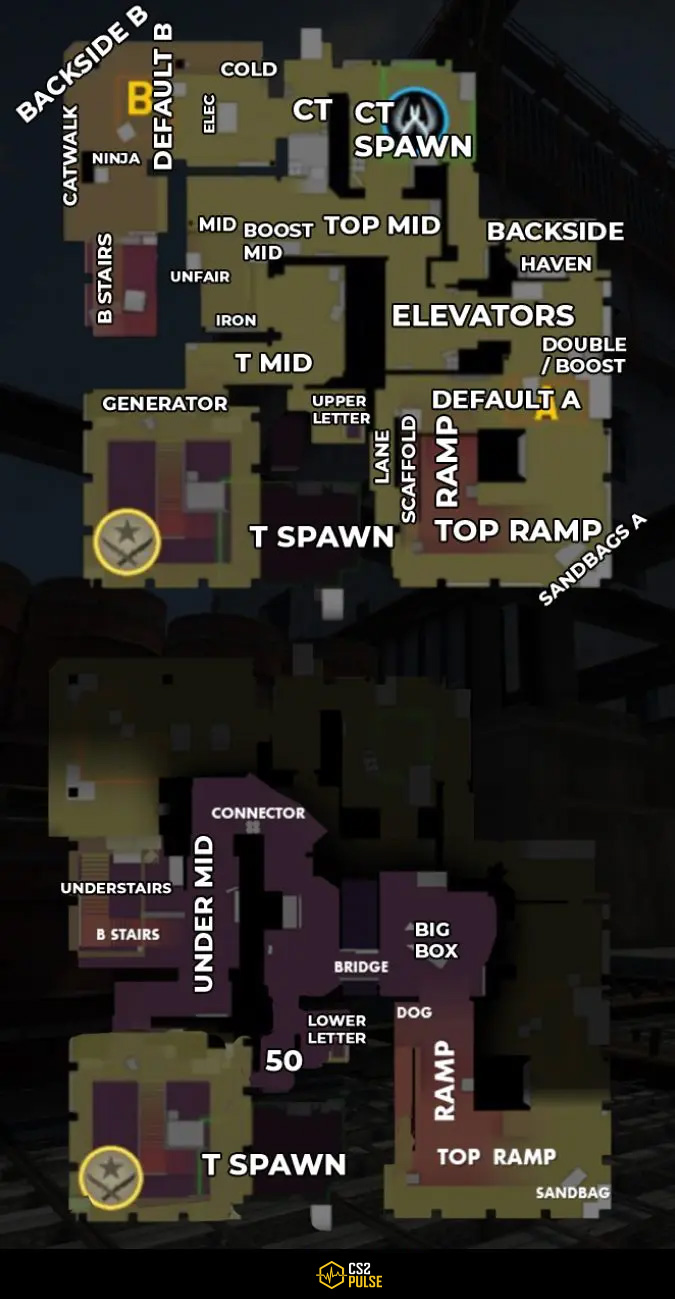
Top 10 Essential Callouts Every CS2 Player Should Know
In the world of Counter-Strike 2 (CS2), effective communication can be the difference between victory and defeat. One of the most essential aspects of gameplay is the use of callouts, which are specific terms or phrases that help players quickly convey the location of enemies and important map features to their teammates. Here are the top 10 essential callouts every CS2 player should master to enhance their teamwork:
- Bomb Site A - Refers to the location where the bomb can be planted on the A side of the map.
- Bomb Site B - The corresponding location for bomb planting on the B side.
- Mid - The central area that connects both bomb sites, crucial for map control.
- Car - Often used to describe a location behind a car, providing cover near specific bomb sites.
- AWP Pit - A advantageous position for snipers, generally near the A site.
- 2nd Floor - Indicates enemy presence on the second level of a building.
- Connector - The passage connecting mid to the A site.
- Long - A long corridor leading towards the bomb site, often used for strategic pushes.
- Catwalk - A narrow elevated path providing a height advantage.
- Back Site - Refers to positions behind bomb sites that allow for defensive holds.
Counter-Strike is a popular tactical first-person shooter game that emphasizes teamwork and strategy. Players choose between two opposing teams, terrorists and counter-terrorists, and engage in various game modes. However, players may sometimes encounter issues such as vac was unable to verify, which can hinder their gameplay experience.
Master the Map: A Detailed Guide to Effective Callouts in CS2
Callouts in CS2 are essential for effective communication and strategy during gameplay. By mastering the map and understanding precise locations, players can significantly enhance their team's coordination. Use specific and consistent names for areas to avoid confusion. Here are some tips to create effective callouts:
- Use short, clear terms for locations.
- Refer to commonly accepted names used by the community.
- Practice with teammates to ensure everyone is on the same page.
Moreover, visual aids can greatly assist in mastering callouts. Consider creating custom maps or diagrams to highlight key areas. Regular practice not only improves your geographical knowledge but also boosts team communication, leading to a more successful gaming experience. Remember, the best callouts come from a thorough understanding of the map and participation in team discussions. By applying these principles, you'll be well on your way to mastering callouts in CS2.
How to Communicate Strategically: The Importance of Callouts in CS2
Strategic communication is crucial in competitive gaming, particularly in CS2, where every second counts. Utilizing callouts effectively can greatly enhance team coordination and decision-making. A well-timed callout can provide vital information about enemy positions, potential threats, or the status of objectives, leading to more informed gameplay. For teams aiming to improve their strategy, developing a consistent callout system is paramount. Here are some key benefits of using callouts:
- Improved Team Communication
- Increased Situational Awareness
- Enhanced Strategic Planning
Incorporating callouts into your strategic communication not only helps the immediate team but also fosters a culture of collaboration and trust. Players who consistently use callouts create a shared language that enhances gameplay, allowing for quicker decisions and reactions during intense moments. To maximize the impact of callouts, consider adopting a standardized naming convention for map locations and actions, which can reduce confusion and streamline communication. Remember, effective communication can be the difference between victory and defeat in CS2.